


Why Abzena?
Trust our integrated approach.

Trust our integrated approach.

Meet our experienced team.

Partnering for success.

Quality is culture.

20+ years of biologics expertise.

State-of-the-art, global facilities.

Earning customer trust.

Recognition of our success.

Meet our scientific experts.

High Affinity, Desired Biological Activity, Hybridoma Sequencing...

Antibody Engineering, Fc Engineering, Antibody Expression, Humanization, Deimmunization...

Early De-Risking & Developability, Antibody Development...

Analytical Method Development, Fc Binding & Functional Assays...

EpiScreen® 2.0, Immunogenicity Risk Assessments, T Cell Assay...

GMP-Ready, Accelerates Timelines, Reduces Risks, & Ensures Scalability, Stable Pools in 3 Weeks

Monoclonal Antibodies, Proteins, Antibody-Drug Conjugates...

Upstream & Downstream, Process Transfer, Scale Up, Characterization & Validation, CLD > Patient...

Clinical Thru Commercial, Tech Transfer, Scale Up, Quality...

Payload Design & Synthesis, Analytical Methods, HPAPI...

ADC, AOC, RDC Design & Discovery...

ADC, AOC, RDC Development, De-Risking & Developability...

Complex & Analytical Chemistry, Polymer Conjugate Formulation...
Analytical Method Development, Bioconjugate Characterization...

Seamless Transfer, Quality Commitment, Regulatory Compliance, ADC Tech Transfer
ADC Formulation, Customized, Stable Liquid & Lyophilized...
Process Transfer, Scale Up, Characterization & Validation, Stability...
ADC Manufacturing, Clinical Thru Commercial, Tech Transfer, HPAPI Handling...

Discover AbZelectPRO™ - seamlessly go from Stable Pools to IND

Discover EpiScreen® 2.0

Starting smart, finishing fast.

Discover LabZient™

Discover Composite Human Antibody™

Discover ThioBridge®

Discover Composite Proteins™

Unique insights into how we partner with our customers.

Offering an overview of our services and expertise.

Published scientific articles reviewed by our peers.

Looking for inspiration? Our whitepapers can help.

Watch our experts share their knowledge on-demand.

Access to our latest scientific featured articles.
Difficult-to-express fusion proteins are an increasingly important class of complex biologics, combining multiple functional domains within a single therapeutic molecule to achieve mechanisms of action that may not be possible with conventional monoclonal antibodies. By bringing together antibodies, receptor domains, cytokines, enzymes, peptides, or other protein components, fusion proteins can be engineered to enhance target engagement, extend half-life, improve pharmacokinetics, and deliver differentiated therapeutic activity.
From Fc-fusion proteins and immunocytokines to receptor fusion proteins and multifunctional protein therapeutics, these modalities are expanding opportunities across oncology, immunology, rare diseases, and other areas of high unmet medical need. As biopharmaceuticals shift toward more complex biologic formats, fusion proteins offer exciting potential for next-generation therapeutic innovation.
Abzena’s integrated expertise helps identify and address these challenges early, enabling the selection and progression of robust fusion protein candidates with greater confidence.

Successful fusion protein development begins with thoughtful design choices. Decisions made during discovery and lead optimization can significantly impact biological activity, stability, manufacturability, and long-term clinical success.
Abzena’s fusion protein approach includes:
By evaluating multiple designs in parallel, we can quickly identify optimal candidates while reducing your downstream development risk. This approach ensures that the most promising molecules are selected – not only for biological performance, but also for their ability to be manufactured consistently and efficiently at scale.
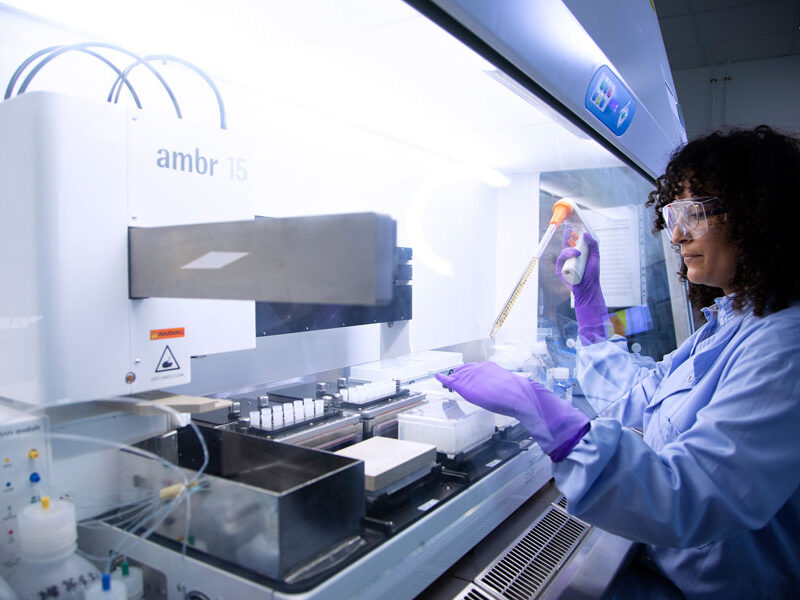
Abzena has successfully developed stable, high-expressing cell lines for complex fusion protein modalities, including self-assembling nanoparticle fusion proteins, delivering robust productivity, product quality, and scalability.
In this case study that is available for download, learn how Abzena’s end-to-end expertise and fully integrated cell line development (CLD), process optimization, and scale-up capabilities played a key role in a collaboration with a non-profit research institute working on novel biomedical interventions.
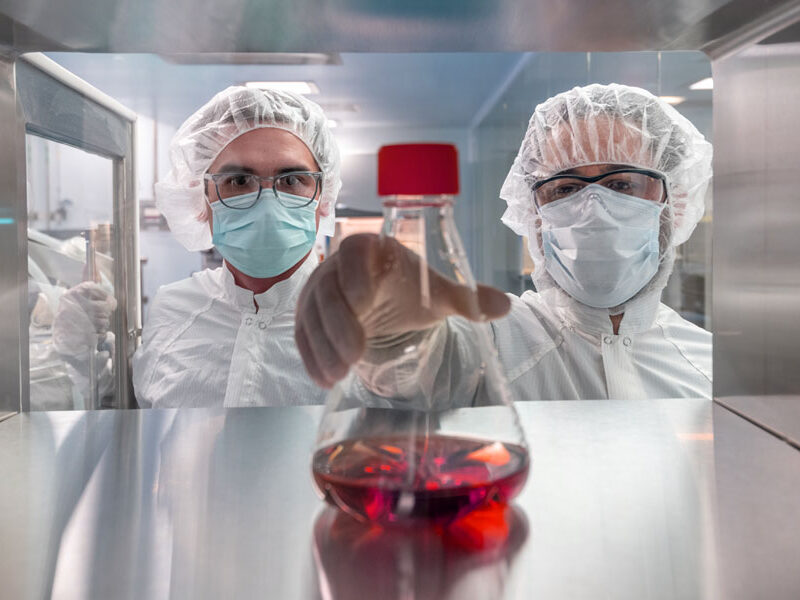
Fusion proteins often require coordinated expertise across multiple disciplines. Fragmented development strategies can introduce delays, transfer risks, and unnecessary complexity.
Abzena provides stage-appropriate integrated solutions supporting:
By bringing these capabilities together under one organization, and through integrated development solutions we help accelerate timelines from DNA-to-IND while reducing development risk.
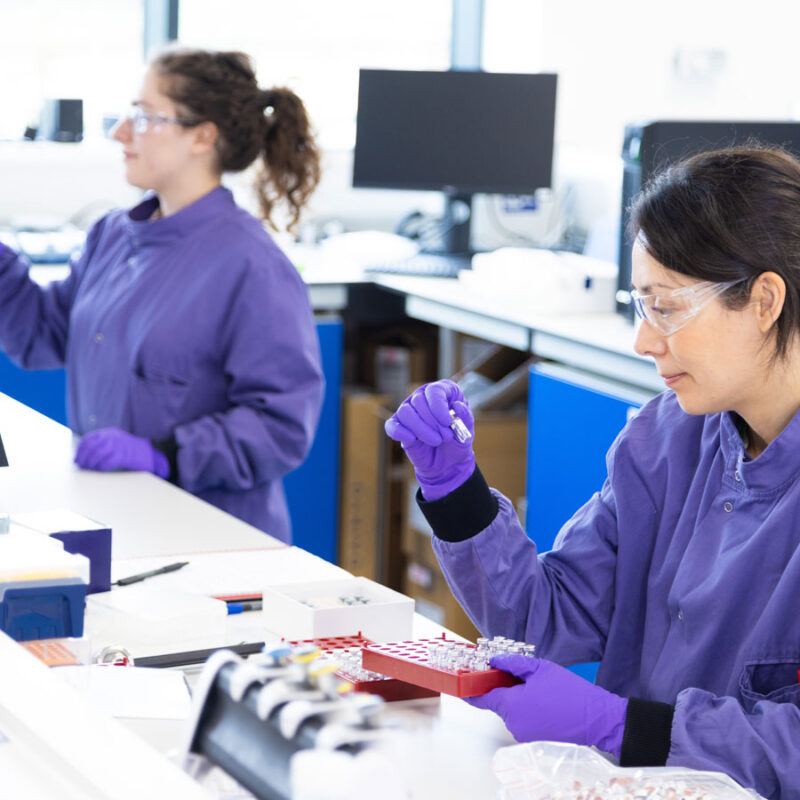
Fusion proteins take many forms, each with distinct advantages and development considerations. Each format presents unique challenges related to expression, folding, stability, solubility, and biological activity. Whether your program already has a preferred molecular design or requires format evaluation, Abzena’s protein engineering experts can support the optimization of:
Our integrated protein engineering and analytical capabilities help identify and address potential liabilities early, increasing confidence as programs progress toward the clinic.
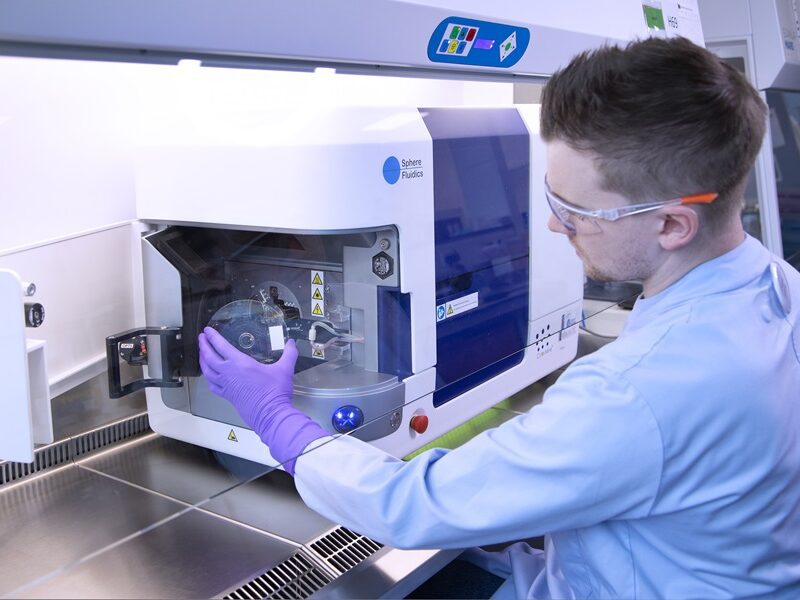
Many fusion proteins are inherently more difficult to express than traditional monoclonal antibodies. Complex domain combinations can introduce challenges such as, low expression titers, protein misfolding, stability concerns, and purification complexity. These issues can become significant barriers during cell line development and scale-up if not addressed early.
Abzena’s development philosophy focuses on integrating manufacturability into candidate design from the beginning. Through developability assessments, analytical characterization, and expression screening, we identify risks before they impact timelines or increase development costs. This enables you to make informed decisions and take programs forward with the greatest probability of technical and clinical success.

Efficient production remains one of the most critical factors in successful fusion protein development. Abzena’s GMP-ready AbZelectPRO™ mammalian cell line development platform has been specifically designed to support both conventional biologics and difficult-to-express molecules, including fusion proteins and other complex therapeutic formats. AbZelectPRO™ combines optimized vectors, advanced host cell lines, and streamlined development processes to achieve:
Our scientific experts work closely across discovery, protein engineering, analytical development, process development, and manufacturing to ensure a seamless path from candidate selection to GMP production.
Abzena combines more than two decades of protein engineering, biologics development, and manufacturing expertise to support increasingly complex therapeutic modalities. Our teams have experience developing monoclonal antibodies, bispecifics, multispecifics, fusion proteins, bioconjugates including ADCS and AOCs, and other next-generation biologics.
Abzena offer:
A fusion protein is a therapeutic molecule that combines two or more functional protein domains, such as antibodies, receptor domains, cytokines, enzymes, or peptides, into a single construct to deliver enhanced biological activity and therapeutic functionality.
Fc-fusion proteins are therapeutic molecules that combine a biologically active protein domain with an antibody Fc region to enhance half-life, stability, and pharmacokinetic performance.
Fusion proteins can offer advantages over traditional monoclonal antibodies (mAbs) by combining multiple biological functions in a single molecule, enabling enhanced activity, improved pharmacokinetics, extended half-life, and novel mechanisms of action.
Fusion proteins are generated through the joining of two or more different genes, resulting in their combined transcription and translation to produce a single protein.
Fusion proteins are designed by optimizing molecular architecture, domain orientation, linker selection, and functional activity while considering stability, developability, and manufacturability.
Fusion protein development can be challenged by issues such as low expression, aggregation, stability concerns, product heterogeneity, and complex manufacturing requirements.
Fusion proteins can be difficult to express because their complex structures may affect protein folding, assembly, stability, and cellular productivity.
Fusion protein manufacturability can be improved through early developability assessment, sequence and format optimization, expression screening, and careful evaluation of stability and product quality attributes.
Fusion proteins are typically manufactured using engineered mammalian cell lines followed by upstream production, downstream purification, analytical characterization, and GMP manufacturing processes.
A stable cell line for fusion proteins is developed by generating and screening high-performing clones that deliver consistent expression, product quality, stability, and scalability throughout development.
Fusion protein analytical characterization commonly includes assessments of identity, purity, aggregation, stability, product quality attributes, and overall molecular integrity.

Partner with Abzena to design, engineer, develop, and manufacture fusion proteins with confidence, from concept through clinical readiness.
